
Website Adelaide

Website design for Adelaide small businesses & sole traders
Small Business Website Specialists
We create distinctive websites designed to improve search visibility, build customer trust and attract the right customers.
By combining content that answers customer questions, purposeful design and integrated SEO, we help communicate what makes your business different and give potential customers the confidence to take the next step.

149
149 5-star Google reviews from our clients

Top 3
Rated Adelaide’s Top 3 web designers for 8 years in a row, 2018-2025
Established 2012
Website Adelaide
Website Adelaide is a top-rated Adelaide website designer for small businesses & sole traders, with custom web design, copywriting & on-page SEO from day one.
Since 2012, we've designed over 500 websites across a wide range of industries for small businesses. We bring together Jarka's 30 years of website design experience and Mikael's 30 years of business, marketing strategy and communication experience.
Through our work with businesses across different industries, we know that effective websites start with understanding what customers need to know, how they make decisions and what matters most to the business. We apply this experience to planning website structure, content and design that help build customer confidence and support visibility in Google and AI search.
%
Websites built & launched
%
Years building websites for SA businesses
%
Years website designer experience
Outsourcing abroad
Recent websites for Adelaide businesses
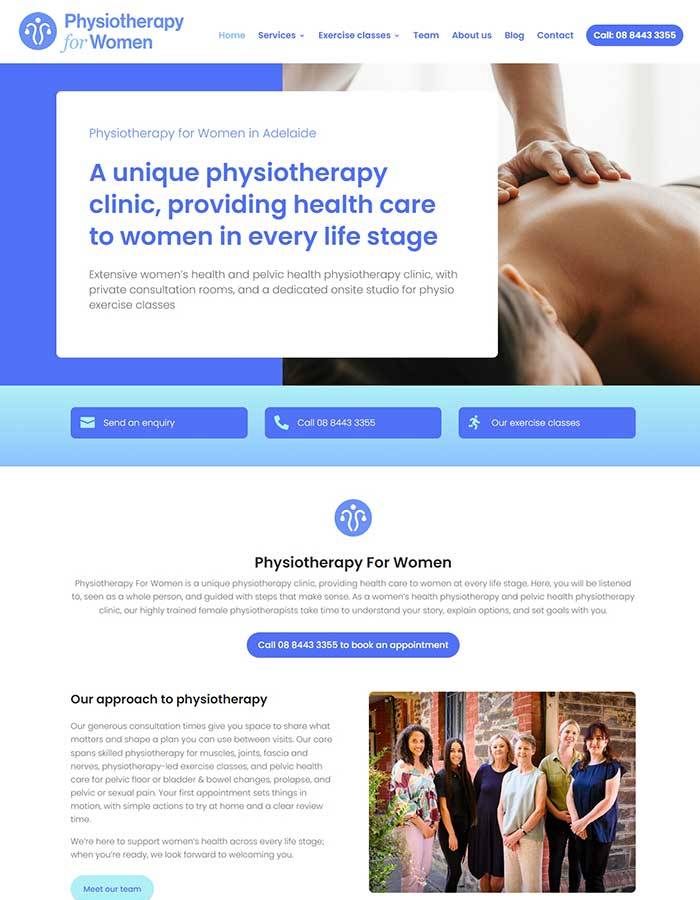
No two businesses are the same, and their websites shouldn’t be either. Here are some of the websites we’ve recently created for businesses across Adelaide and South Australia.
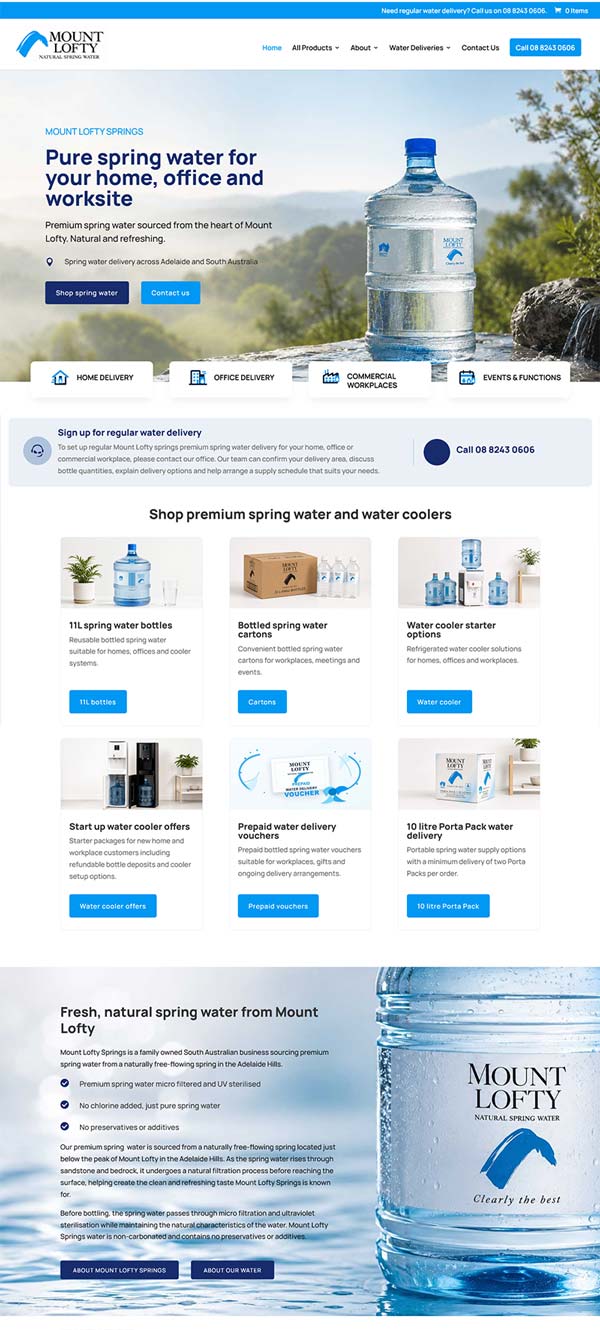
Visit Mount Lofty website
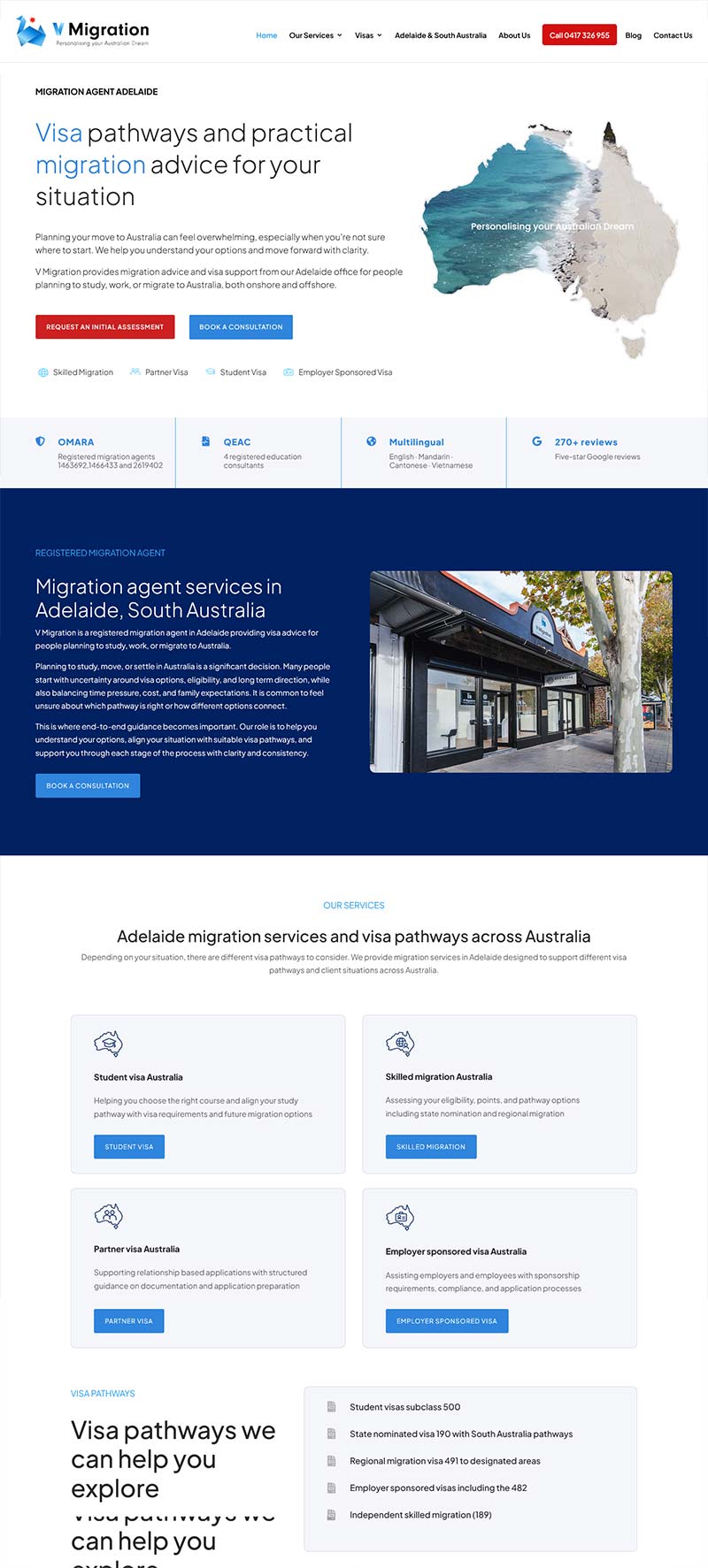
Visit V Migration website
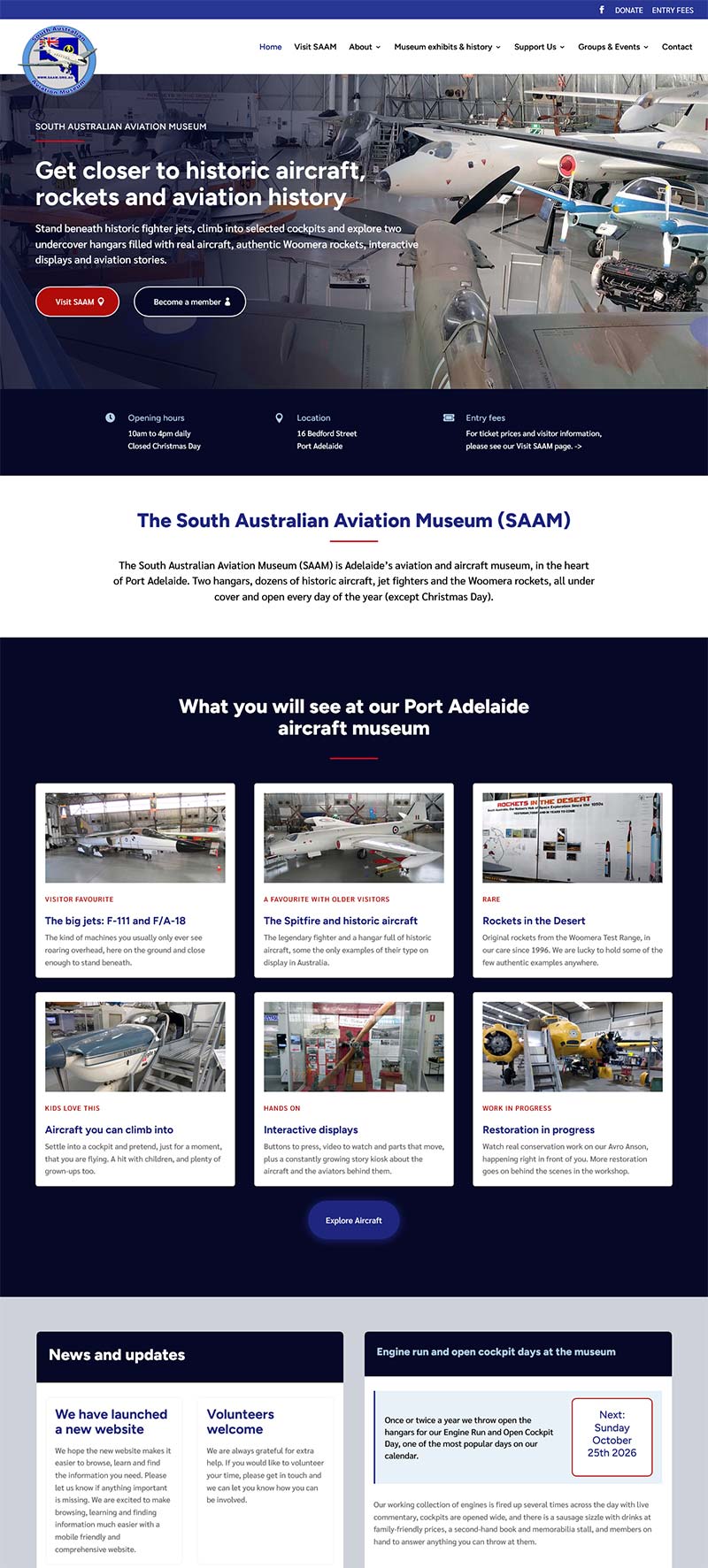
Visit The South Australian Aviation Museum website
Who we help
Website design for Adelaide businesses across different industries
Website Adelaide specialises in websites for small businesses and sole traders, with experience across a broad range of Adelaide industries, including trades, construction, allied health, dental, NDIS, engineering, manufacturing, professional services, tourism, accommodation, retail and eCommerce, and more.
Browse our industry pages relevant to your business to see how customer needs, service structures, page planning and website content can differ from one sector to another.



Building & construction: website guidance →
Our industry experience →


Services
Website Adelaide's web design & SEO services
Web design
Modern, responsive web design →
Website redesign
Transforming outdated websites →
Ecommerce website design
Online stores that make selling easy →
WordPress website design
Flexible designs with leading CMS →
On-page SEO
Optimise keywords, content & structure →
Website copywriter
Writing valuable text content for websites →
Website strategy
Business-focused website strategy →
Technical SEO
Fixing issues to improve SEO →
Web hosting
Fast & secure hosting for great performance →
Website case studies with real results for Adelaide businesses
See how we helped three local businesses become easier to find, explain their services and products more clearly, and reach more potential customers. Each case study shows what we changed and the difference it made.

Website design and SEO · Adelaide property clearance
From a Facebook page to a website that supported business growth
House & Shed Property Clearances wanted to reach customers beyond their local area and take on larger jobs. We organised their services, clarified who they help and built a professional website that made the business easier to find and trust.
Regular enquiries from people ready to book
More staff hired as demand increased
Larger property clearance jobs

Website redesign and local SEO · Adelaide piano removals
A clearer website that brought in more enquiries
DC Piano Moves already had a website, but it needed to work harder as competition increased. We refreshed the design and reorganised the service information so customers could find answers, trust the business and ask for a quote.
Improved visibility for Adelaide piano mover searches
A steady flow of new enquiries
Larger property clearance jobs

Ecommerce website design and SEO · Australian furniture retailer
From a hard-to-find online shop to one reaching more customers
Furniture Design Australia had an online shop, but very few people were finding it. We rebuilt the website, organised the product range and added useful information to help customers find the business and explore its furniture more easily.
More potential customers finding the business
Products organised more clearly
A website that can grow with the product range
Want a website that helps people find your business and feel confident getting in touch?
The team
Website designer & web strategy for Adelaide small businesses and sole traders

Jarka – The founder and website designer
Website Adelaide was founded in 2012 by Jarka, who brings 30 years of experience as a website designer. Since then, she has designed and built 500+ websites for small businesses and sole traders.
When you work with Website Adelaide, you work directly with Jarka from start to finish. She provides the custom design, site structure, and on-page SEO implementation so your website is well-structured, readable, and launch-ready.

Mikael – Co-owner, strategy & communication
Website Adelaide is co-led by Mikael, a marketing executive with 25+ years’ experience across industries and sectors in South Australia and international markets. Mikael works with you to shape the website strategy and communication, clarifying value proposition, defining information architecture, and content development so your website is well-structured, credible and engaging.
How we work
A process built around your business
Every project follows the same integrated approach regardless of size or budget. We start by understanding your business properly before anything is scoped, and we build with strategy, content and design working together from the first step to the last.
01
Discovery call
We learn about your business, your goals and what you want the website to do before anything is quoted or recommended.
02
Strategy-led proposal
Scope and structure are defined by what your business needs to compete online, based on a strategic review of your niche, competitors, and search opportunities.
03
Content and structure planning
Your website is planned around how customers search and make decisions, with copy writing as part of the build from the start.
04
Content-led design and build
Design and layout are shaped around the content, not the other way around. You review and approve the home page look and feel before the rest of the site is built.
05
Launch-ready foundation
On-page SEO, mobile testing and a scalable structure are built in from day one, so the website launches with a strong, well-structured foundation.
From discovery call to launch, every step explained in detail.
Website Adelaide:
Award-winning website designer
Our work has been recognised by clients and independent organisations, reflecting a long-standing focus on quality website design and personal service.

Google Reviews
149 5-star Google reviews from our clients

Three Best Rated
8 consecutive years
Adelaide Top 3 web designer
2018–2025

DesignRush
Featured among leading small business web designers
Listed by DesignRush
How we work
Strategy, design, copywriting and on page SEO, built together from the start
Every website we build includes strategy, design, copywriting and on-page SEO as a single integrated process. We don’t see that as separate decisions.
01
Website strategy
Understanding your business, customers and market position so every decision from site structure to content development is informed by what matters most.
02
Copywriting
Professionally written content that explains your services in-depth, positions your business well, and gives visitors a reason to get in touch.
03
Custom design
Built for your business, not adapted from a standard template. Structure, layout and visual design are built around your business, services and your audience.
04
On-page SEO
Built into the structure from the start with headings, page architecture, content hierarchy and local SEO signals, not added as an afterthought.
When Google first crawls a new website, it begins forming an assessment of what the business is, what it knows, who it serves, and how credible it appears. That initial assessment sets a baseline, and search visibility builds from there.
Including what's always included, indicative prices, and how to compare quotes.
Why choose us
Why work with Website Adelaide?
For Adelaide small businesses and sole traders, these are the advantages we bring. Every project includes the essentials that support visibility in search and enquiries.

Top-rated website designer in SA
Recognised for web design quality, with clear layouts, easy navigation and websites that help visitors find information and enquire.

Proven web design expertise
More than 500 websites developed since 2012 for small businesses across a broad range of industries, business types and service sectors.

Marketing strategy & communication
Backed by 25 years of marketing strategy experience, helping shape positioning, value propositions, audience focus and clear website messaging.

SEO-friendly web design
Custom websites planned around search visibility, site structure, content and user experience from the beginning of every project.

Affordable websites for small businesses
Affordable website design for Adelaide small businesses and sole traders, combining custom design, content and on-page SEO in one project.

Responsive website design in Adelaide
Responsive websites for Adelaide small businesses and sole traders, designed to work smoothly across desktop, tablet and mobile devices.

Valuable website content creation
Website copy structured around customer questions, search intent and decision-making, helping explain services clearly and support organic search visibility.

Custom website design for small businesses
Each website is designed around the business, services, customers and brand, rather than relying on generic off-the-shelf templates.

Local build, no overseas outsourcing
Website design, content and build work is completed in-house, with local Australian partners used when specialist support is required.
Search is changing. Stay visible in AI answers
On-page SEO is still our core. As search shifts toward AI answers, there are extra layers that help your brand be named and cited. We keep the website work central and add the pieces that improve visibility in AI results when it matters.

What our clients say
Website Adelaide prides itself on delivering exceptional web design and SEO services that make a real difference for small businesses. Don’t just take our word for it; here’s what our happy clients say.
★ ★ ★ ★ ★
..... From start to finish, Website Adelaide handled everything with professionalism and expertise, including copywriting, website design, and hosting. I cannot speak highly enough of their services
Read more
and would highly recommend them to anyone in need of webpage development. Five stars all around.
lloyd mcfeeters, Fleurieu Locksmith, Victor Harbor
★ ★ ★ ★ ★
I had a fantastic experience working with Website Adelaide on my website, EasyAs Invoicing for NDIS Providers. The process was smooth, and the responsiveness was outstanding. Every detail was
Read more
carefully handled, and any requests were addressed quickly. This is the second website they have built for me, and I have been extremely happy both times. Highly recommended for anyone looking to launch a professional and well-designed website!
Tricia Mc (Tricia EasyAs Invoicing)
★ ★ ★ ★ ★
Both Jarka and Mikael did a great job helping us rebuild the website for our business 'Sure Start Health' this year. They asked plenty of great questions and worked hard for us during the whole
Read more
process. Website Adelaide is a super team with high attention to detail. Happy to recommend them.
Richard Mathers, Sure Start Health, Mitcham, Adelaide
★ ★ ★ ★ ★
We've had the pleasure of working with Jarka on three separate website projects, and she has exceeded our expectations every single time. Her responsiveness is truly remarkable - she's always quick
Read more
to reply and keeps communication flowing smoothly throughout each project.
What sets Jarka apart is her expertise and willingness to provide excellent advice. She doesn't just execute what we ask for; she offers valuable insights and recommendations that consistently lead to better results. Her guidance has been instrumental in helping us achieve websites that not only look great but perform exceptionally well.
Jarka's dedication is impressive. She's willing to work flexible hours to ensure we meet our deadlines, no matter how tight they might be. This commitment to our success has made her an invaluable partner in our business.
Beyond her technical skills and work ethic, Jarka brings a collaborative spirit and genuine care for the outcome of each project. If you're looking for a web developer who combines technical excellence with outstanding service, I cannot recommend Jarka highly enough.
Katina Jones, Seléne Spa, Adelaide CBD
★ ★ ★ ★ ★
Excellent service from Jarka at Website Adelaide. We have recently expanded our brand (Naiko Retreat, luxury tourist accommodation) and the new website for Naiko at the Bluff is totally on point with branding and feel to our other website.
Read more
Excellent research for "things to do" etc. Jarka is very skilled and everything from SEO to layout / branding and relevant information has been covered. We look forward to working with the team again when stage 2 of Naiko at the Bluff launches.
Christine Crawford, Naiko at the Bluff, Victor Harbor
★ ★ ★ ★ ★
Our team at Temperature Control Services had a fantastic experience working with Jarka and Mikael from Website Adelaide. From start to finish, they were extremely knowledgeable, professional, and highly
Read more
responsive to our requests. They supported us every step of the way during the build of our website, providing guidance on both design and SEO. The end result is a website we are proud of, and we can already see the benefits for our online presence. If you’re looking for expert web design in Adelaide with a team that truly cares about delivering results, I couldn’t recommend Jarka and Mikael at Website Adelaide highly enough.
Matt Hawke, TCS, Camden Park
★ ★ ★ ★ ★
It was a pleasure to work with Jarka and Mikael in the rewrite and redesign of our website. The process commenced with an excellent appraisal of our old website via video, detailing how it could be improved and strengthened in all areas.
Read more
Answering questions on our business, greatly assisted the new web write up and layout. We congratulate Website Adelaide on their dedicated business approach and simply knowing how to keep their customers happy. Thank you for making the process smooth.
Rebecca Crawford, Physiotherapy for Women, Lockleys, Adelaide
★ ★ ★ ★ ★
Website Adelaide really helped me get a detailed multi page website online quickly. Their efficient view and attention to detail with web design and format is
Read more
very professional. Hawk Tooling is already getting noticed. Highly recommend these guys to get you to the next marketing level.
Jarrod Clark, Hawk Tooling, Lonsdale, Adelaide
Service areas
Local web design service areas across Adelaide and South Australia
With more than 500 websites completed since 2012, we've worked with businesses right across metropolitan Adelaide and South Australia
Metropolitan Adelaide
CBD, North, East, West, South, including Unley, Norwood, Magill and the eastern suburbs. Professional services, healthcare, general small business.
Industrial & trade precincts
Lonsdale, Edwardstown, Regency Park, Beverley & Hendon, Gepps Cross, Mawson Lakes, Netley, North Plympton & Marleston, Richmond, Keswick & Mile End South. Manufacturers, fabricators, trades, auto specialists, logistics.
Southern & coastal suburbs
Aldinga, Maslin Beach, Reynella, Old Reynella & Morphett Vale, Seaford & Moana, plus Christies Beach, Hackham, Noarlunga, Willunga, Glenelg, Brighton, Hallett Cove and Port Noarlunga. Local services, retail, lifestyle businesses.
Fleurieu Peninsula & wine tourism
McLaren Vale, Victor Harbor, Yankalilla, plus Deep Creek and Mount Compass. Tourism operators, accommodation, hospitality, cellar doors.
Adelaide Hills & wine regions
Adelaide Hills, Barossa Valley, Clare Valley. Tourism, hospitality, boutique producers.
Regional South Australia
Riverland, Yorke Peninsula, Eyre Peninsula, Kangaroo Island. Agriculture, tourism, regional service businesses.
FAQ's with in-depth answers
What is web design Adelaide?
Web Design Adelaide is a highly relevant search term used by potential clients in search engines when looking for an Adelaide web designer, agencies or website developers to create a website for their business.
When searching for the term "web design Adelaide", people’s intent is likely to find someone that is based in Adelaide and that can understand their unique business needs and preferences when it comes to web design. This includes the web designer’s ability to create engaging and SEO-optimised websites. The synergy between good web design and on-page SEO is essential for creating a successful online presence. By prioritising user experience, visual appeal, and technical optimisation, a website should be able to attract, engage, and convert visitors.
Whether establishing credibility, enhancing engagement, or improving search rankings, Adelaide web design and SEO work hand-in-hand to drive success in the digital marketplace. If you are a business owner or work in a business that are keen to grow online, here are insights and an in-depth look at what hides behind the keyword search term “web design Adelaide” and what strategies to embrace for your website.
The importance of web design for businesses
- A first impression that lasts
Research underscores the importance of first impressions in web design. A Behaviour & Information Technology journal study found that users form opinions about a website in as little as 50 milliseconds. Furthermore, Google research shows that users can form an aesthetic judgment about a website's visual appeal in just 17 milliseconds. Thus, investing in quality web design is essential for businesses aiming to capture and retain customer interest in an increasingly competitive environment.
- The role of web design in credibility
A well-designed website acts as a brand's online face, establishing credibility and fostering trust online. An outdated, cluttered, or difficult-to-navigate website can lead potential customers to leave and seek competitors. Effective web design ensures businesses stand out in a competitive environment by presenting a polished, professional online presence. Whether it's an e-commerce website design or a service-based company, effective web design can bridge the gap between customer needs and business objectives.
- User experience (UX) and conversion rates
A visually appealing and easy-to-navigate website enhances user satisfaction and encourages visitors to engage with content. This engagement translates into higher conversion rates. Whether it's an e-commerce platform or a service-based website, investing in quality web design helps bridge the gap between customer needs and business objectives. - SEO and visibility
Search engines prioritise websites that are user-friendly, fast-loading, and mobile-responsive. These factors are all influenced by web design. A well-optimised website improves search engine rankings, increases traffic, and drives potential sales.
Key elements of engaging web design
Creating an engaging website requires a combination of several key design elements that work harmoniously to capture and maintain the user's attention. Here are some critical components.
- Clean and intuitive layout
A strategic layout guides visitors seamlessly through the website, ensuring information is easy to find. Overly cluttered designs can overwhelm users, leading to higher bounce rates. - High-quality visuals
High-quality images, videos, and graphics enhance a website's aesthetic appeal and storytelling capability. Optimising these visuals for mobile devices ensures a consistent experience across platforms. - Interactive features
Adding sliders, animations, and interactive infographics creates a dynamic experience that encourages visitors to stay longer on the site. These features not only elevate engagement but can also drive conversions. - Responsive design for mobile users
With mobile devices driving over 58.67% of global web traffic (Statista), responsive design is essential for accessibility. A responsive website ensures a seamless user experience across devices, boosting engagement and rankings. - Trust signals and testimonials
Including trust signals like customer reviews and certifications builds credibility. Testimonials provide social proof, helping potential clients feel confident about working with your business.
Understanding the principles of SEO
Search Engine Optimisation (SEO) is a fundamental aspect of web design that ensures a website is visible to potential customers searching for relevant services or products. Understanding SEO principles involves recognising how search engines operate and how they rank websites. At its core, on-page SEO is about optimising a website's content and structure to align with search engine algorithms, which prioritise relevance and quality.
- Keyword research
One of the foundational principles of SEO is keyword research. This involves identifying potential customers' terms and phrases when searching for products or services. Businesses can improve their chances of ranking higher in search results by strategically incorporating these keywords into the website's content, meta tags, and URLs. However, using keywords naturally within the content is essential to avoid penalties from search engines for keyword stuffing. Tools like Google Keyword Planner and SEMrush provide insights into search volume and competition, allowing businesses to target the right keywords strategically. - Quality content
Search engines prioritise websites that publish valuable and informative content. Regularly updating content helps businesses maintain relevance and authority in their fields. - Technical SEO
Optimising metadata, alt tags, and internal links ensures search engines can efficiently crawl and index the site. Combined with a user-friendly design, this creates a website that excels in both visibility and usability. - Page speed optimisation
Studies reveal that a one-second delay in load time can result in a 7% reduction in conversions (HubSpot). Speeding up your site improves user experience and search engine rankings.
The role of keywords in web design
Keywords are a critical component of SEO and play a pivotal role in web design. They are the terms and phrases that users input into search engines, and their strategic use can significantly influence a website's visibility. Incorporating relevant keywords into the website's text, headings, and meta descriptions helps search engines understand the page's topic, thereby improving its ranking for those search queries.
When designing a website, it is essential to conduct thorough keyword research to identify the most relevant and effective keywords for your business niche. Tools like Google Keyword Planner or SEMrush can provide insights into the search volume and competition levels for various terms. Once identified, these keywords should be naturally integrated into the website's content, ensuring they fit seamlessly within the context. It aids SEO and enhances the overall quality of the content, making it more informative for users.
Keyword placement
Furthermore, the placement of keywords matters. Essential keywords should be included in key areas such as page titles and headers and within the first 100 words of the content. This strategic placement signals to search engines the importance of these terms, improving the website's chances of ranking higher in relevant searches. However, balance is key; overusing keywords can lead to a poor user experience and may trigger penalties from search engines. Thus, careful consideration and a strategic approach to keyword integration are vital for practical web design.
Optimising website structure and navigation
An optimised website structure is crucial for both user experience and SEO. As of the fourth quarter of 2023, mobile devices (excluding tablets) accounted for approximately 58.67% of global website traffic. Statista
"With mobile devices driving over half of global web traffic, responsive design is no longer optional- it's essential for user engagement and SEO rankings. Ensuring your website is accessible and functional across all devices improves user experience and helps search engines recognise your site as mobile-friendly, a key ranking factor."
Website structure
A well-organised website allows visitors to navigate easily, finding the information they need without frustration. This enhances user satisfaction and reduces bounce rates, which can positively impact search engine rankings. A logical structure typically includes a clear hierarchy of pages, with main categories branching out into subcategories that make sense to users.
Website navigation
Navigation is another essential aspect of website structure. A user-friendly navigation menu featuring clear labels and intuitive paths helps visitors locate content quickly. Drop-down menus can effectively organise complex information, while a search bar provides an additional layer of convenience for users seeking specific content. Furthermore, breadcrumbs can enhance navigation by allowing users to easily track their path and return to previous pages.
Additionally, optimising the website's structure for mobile devices is increasingly important. With a significant portion of web traffic coming from smartphones, ensuring the website is mobile-friendly can improve user experience and SEO rankings. A responsive design that adjusts to different screen sizes and a streamlined navigation experience can lead to higher engagement and conversion rates. By prioritising these aspects, businesses can create an optimised website structure that caters to users and search engines.
Don’t forget…..
The role of responsive design
Google's mobile-first indexing further emphasises the importance of mobile-friendly websites for maintaining and improving rankings. A responsive site improves usability and helps retain visitors, reducing bounce rates.
Clear navigation
A user-friendly navigation menu helps visitors locate content quickly. Features like drop-down menus and breadcrumbs enhance the user’s journey, reducing frustration and improving engagement.
Logical page hierarchy
A well-structured hierarchy of pages ensures users and search engines can easily understand the site’s content. This organisation boosts user satisfaction and aids in achieving better search rankings.
Internal linking for SEO
Internal links guide users to relevant content while helping search engines understand the site's structure. This improves crawlability and effectively distributes link equity.
Incorporating visual elements for a captivating user experience
Visual elements are indispensable in creating a captivating user experience on a website. High-quality images, graphics, and videos can significantly enhance the aesthetic appeal of a site, drawing visitors in and encouraging them to engage with the content. For instance, using striking visuals and authentic photos that align with the brand's message captures attention and helps convey information more effectively than text alone.
Visual elements impacts user behaviour
In addition to aesthetics, visual elements can also influence user behaviour. Incorporating interactive visuals, such as infographics or animated graphics, can make the user experience more dynamic and enjoyable. These elements can illustrate complex concepts or data engagingly, helping visitors absorb information quickly. However, ensuring that these visuals do not overwhelm the user or distract from the primary content is essential.
Moreover, the strategic use of white space is vital in web design. White space, or negative space, refers to the areas of a design that are left unmarked. It can create a clean, organized look, making it easier for users to focus on the page's key elements. By balancing visual elements with adequate white space, businesses can guide users' attention and create a more enjoyable browsing experience.
Mobile responsiveness and its impact on SEO
Mobile responsiveness has become a crucial factor in web design with the increasing use of mobile devices for browsing the internet. A mobile-responsive website automatically adjusts its layout and content to fit the screen size of the device being used, ensuring that users have a seamless experience regardless of whether they are on a smartphone, tablet, or desktop. This adaptability is essential, as most web traffic originates from mobile users.
Mobile responsiveness and SEO
From an SEO perspective, mobile responsiveness is critical for maintaining and improving search engine rankings. Google has shifted to a mobile-first indexing approach, meaning it primarily uses the mobile version of a website for indexing and ranking. If a website is not optimised for mobile devices, it may not perform well in search results, leading to a loss of visibility and potential customers. Therefore, ensuring a mobile-friendly website can significantly impact its overall SEO performance.
The first organic result in a search engine results page has an average click-through rate of 27.6%. Forbes: "Achieving a top position in search results is crucial, as the first organic result has an average click-through rate of 27.6%, significantly enhancing website visibility and user engagement."
In addition to affecting search rankings, a mobile-responsive design enhances user engagement. Visitors are more likely to stay on a site that is easy to navigate and visually appealing on their device. This increased engagement can lead to lower bounce rates and higher conversion rates, as users are more inclined to explore the website and interact with its content. By prioritising mobile responsiveness, businesses comply with SEO best practices and provide a better experience for their users.
Maximising website speed and performance
Website speed is a critical factor that influences both user experience and SEO. Studies have shown that users are highly sensitive to loading times; even a few seconds of delay can significantly increase bounce rates and reduce user satisfaction. Therefore, optimising website speed should be a priority for any business looking to improve its online presence.
How to optimise website speed
There are several strategies to enhance website speed. First, optimising images is essential; large image files can slow loading times. Utilising image compression tools can reduce file sizes without sacrificing quality, ensuring that visuals load quickly. Additionally, leveraging browser caching allows returning visitors to load the site faster by storing static files on their devices, minimising the amount of data that needs to be downloaded upon each visit.
Moreover, minimising the use of heavy scripts and plugins can improve performance. While these tools can add functionality to a website, excessive use can lead to slower loading times. By carefully selecting and optimising the scripts used, businesses can create a more streamlined user experience. Regularly monitoring website performance through tools like Google PageSpeed Insights can help identify areas for improvement, ensuring that the site remains fast and efficient over time.
The importance of CTAs
User-friendly forms and effective call-to-actions (CTAs) are essential web design elements that can significantly impact conversion rates. Forms are often the primary means users interact with a website, whether signing up for newsletters, requesting quotes, or making purchases. A well-designed form should be simple, requiring only essential information to reduce friction and encourage completion.
To enhance user experience, forms should be visually appealing and easy to navigate. This includes using clear labels, logical groupings, and step-by-step guidance for multi-part forms. Additionally, incorporating inline validation can provide immediate feedback to users, helping them correct errors before submission. Businesses can increase the likelihood of user engagement and conversion by minimising the effort required to complete a form.
Call-to-actions are equally crucial in guiding users towards desired actions on a website. Effective CTAs should be clear, compelling, and strategically placed within the content. Using actionable language and contrasting colours can help these buttons stand out, drawing attention from visitors. Including CTAs at multiple points throughout the site is also beneficial, ensuring that users have opportunities to engage regardless of where they are in their browsing journey. By prioritising user-friendly forms and effective CTAs, businesses can enhance their conversion rates and overall website effectiveness.
How can web design and SEO work hand in hand?
Small businesses often ask how web design and SEO can complement each other to achieve online success. The relationship between these two disciplines goes beyond aesthetics and algorithm. It involves integrating on-page SEO (keywords, content structure) and technical SEO (site speed, mobile-friendliness) into the design process. This ensures an experience that not only connects design appeal with search engine performance but also drives traffic, engagement, and user satisfaction.
Web design and SEO – the importance of it
First impressions are key
A website acts as a virtual storefront for businesses and individuals. The significance of good web design is crucial. It creates the first impression users have of a brand and greatly affects their perceptions and interactions. A well-crafted design attracts visitors and keeps them engaged, increasing the likelihood of conversions. Research shows visitors form an opinion about a website in just 0.05 seconds (CXL Institute). This fact highlights the need for websites to be visually compelling and functional from the start, as this split-second judgment can influence whether users stay or leave.
Trust through web design layout
However, having a beautiful website alone is not enough. A cohesive design reinforces credibility. Studies indicate that 38% of users will stop engaging with a website if the content or layout is unattractive.
SEO drives design’s reach
SEO, or Search Engine Optimisation, is the practice of enhancing the visibility of a website on search engines like Google. It encompasses various techniques and strategies to improve a site’s ranking in search results, thus driving organic traffic. While on-page SEO focuses on keyword optimisation and content relevance, technical SEO ensures the site’s structure, speed, and mobile responsiveness meet search engine standards. When integrated with web design, SEO helps ensure a website is appealing but also accessible and discoverable. Integrating SEO ensures the website is visually attractive and optimised for search engines, creating a double advantage. While web design attracts users, SEO ensures they find the site. According to BrightEdge, organic search drives 53% of website traffic, making SEO an indispensable partner in the design process.
Understanding web design principles for SEO
As an effective Adelaide web designer, it is important to effectively integrate web design and SEO, it is essential to understand the fundamental principles of good web design. Good web design serves as the structural framework for SEO success. By aligning design elements with on-page SEO best practices, businesses can create sites that perform well for users and search engines. A well-designed website encompasses visual elements such as colour schemes, typography, layout, functionality, and usability. Effective web design prioritises user experience (UX), ensuring visitors can navigate the site easily and find the information they seek without frustration. This user-centric approach aligns perfectly with SEO objectives, as search engines favour websites that provide a positive experience for users.
Mobile-first design
Google’s mobile-first indexing ensures that sites optimised for mobile devices rank higher. According to Statista, mobile devices accounted for 58.99% of global web traffic in 2024, reinforcing the importance of responsive, mobile-friendly design.
Readable fonts and layouts
Poor typography or cluttered layouts can deter users and increase bounce rates. Clear fonts and ample spacing improve readability, directly impacting user engagement metrics that search engines consider
Accessibility enhances usability
Accessible web design ensures inclusivity and reaches a broader audience. The company W3C notes that accessible websites increase user retention, benefiting user experience and SEO.
Technical aspects that influence SEO
Technical aspects such as clean coding, fast-loading pages, and mobile responsiveness significantly impact how well a website performs in search rankings. These factors form the backbone of technical SEO, ensuring that websites are not only visually appealing but also optimized for performance and search engine standards. By combining aesthetic appeal with technical functionality, businesses can create a website that looks great and performs well in search engine rankings. This understanding of web design principles is crucial for anyone looking to harness the power of SEO to drive online success.
Optimising website structure and navigation for search engines
A website's structure is critical in determining how users and search engines interact with its content. Effective navigation enhances usability while helping search engines crawl and index the site more efficiently.
Hierarchical architecture
The architecture of a website determines how easily search engine crawlers can navigate and index its content. A clear and logical structure, often represented through a sitemap, helps users and search engines understand the relationships between different pages. All this enhances the user experience and the likelihood of higher search engine rankings. When designing a website, it is essential to create a hierarchy that reflects the importance of each page, with the homepage serving as the central hub.
Navigation
Navigation is another critical factor in website structure. A user-friendly navigation menu allows visitors to quickly find the information they need, which can significantly reduce bounce rates. Search engines take note of user engagement metrics, and a well-structured navigation system encourages users to explore more of the site, thus improving its authority. Incorporating breadcrumb navigation can further enhance usability, allowing visitors to track their path and return to previous pages effortlessly.
Clear URL structure
Optimising URLs is an essential aspect of website structure. Clean, descriptive URLs that include relevant keywords improve usability and help search engines understand the page's content. For example, instead of a URL like www.example.com/page1, a more descriptive URL such as www.example.com/red-shoes would be more beneficial for both users and search engines.
Internal linking strategies
Internal links guide users to relevant pages while distributing link equity across the site. Tools like Ahrefs reveal that sites with well-planned internal links often see anincrease in crawl efficiency by search engines.
Incorporating relevant keywords in web design elements
Keywords play a crucial role in SEO, bridging what users are searching for and the content that a website offers. This is why it is so important to work with a website copywriter that understand that the content needs to be written with on-page SEO in mind, as well as technical SEO aspects. Therefore, incorporating relevant keywords into various web design elements is essential for driving organic traffic. This includes the textual content, meta tags, image alt texts, and URLs. By strategically placing keywords throughout the site, businesses can enhance their chances of appearing in search engine results for those specific terms.
Keywords
When designing a website, it is essential to conduct thorough keyword research to identify the terms and phrases that potential customers use to search for products or services. Once these keywords are identified, they should be incorporated into various website elements, starting with the page titles and headings. Search engines place significant weight on these elements, providing context about the page's content.
Images
Images are another critical element where keywords can be incorporated. By adding descriptive alt text to images, businesses can help search engines understand what the images depict, improving their chances of appearing in image search results. Furthermore, using keywords in image file names can also enhance SEO. Ultimately, by weaving relevant keywords into the fabric of web design, businesses can create an optimised website that attracts more visitors and improves search engine rankings.
Meta titles and descriptions
Incorporate primary keywords into title tags and meta descriptions. These elements act as the first impression on search engine results pages (SERPs) and influence click-through rates (CTR).
Alt text for images
Alt tags describe images for search engines, improving accessibility and helping content rank for image-based searches. Research from Moz indicates that image optimisation contributes to overall page rankings.
Header tags (H1, H2, H3)
Using descriptive headings breaks up user content and highlights search engine structure. Ensure primary keywords appear in at least one H1 or H2 tag per page.
The role of website speed in SEO
As an experienced Adelaide web designer, we know that website speed is a fundamental factor that affects both user experience and SEO. A slow-loading website can lead to frustration and abandonment in an age where users expect instant access to information. Research shows that even a one-second delay in page load time can result in significant drops in conversion rates. Search engines like Google have recognised speed's importance and included it as a ranking factor in their algorithms. Therefore, optimising website speed is not just a technical concern but a critical aspect of web design and SEO.
Website load speed is a critical factor influencing user experience and conversion rates. Here are some key statistics highlighting its importance:
Performance metrics
According to Aberdeen Group, a delay of just one second reduces page views by 11% and decreases customer satisfaction by 16%. Ensuring a fast-loading website is essential for maintaining user engagement. As page load time goes from one to three seconds, the probability of bounce increases by 32% ( ToolTester).
Speed optimisation techniques
Several factors can impact website speed, including server response time, image sizes, and the use of scripts. Web designers must ensure the website is hosted on a reliable server that efficiently handles traffic. Optimising images by compressing them without sacrificing quality can significantly reduce load times. Minimising CSS and JavaScript files can also help speed up a website, making it more responsive to user actions.
SEO tools
Tools such Pingdom can provide valuable insights into a website's performance speed and highlight areas for improvement. By addressing issues related to speed, businesses can enhance user satisfaction, reduce bounce rates, and ultimately improve their search engine rankings. In this way, the relationship between website speed, web design, and SEO is interconnected, highlighting the necessity for a holistic approach to online success.
Mobile-friendly design is an SEO imperative
With the rise of mobile devices, having a mobile-friendly website has become essential for online success. Google has adopted a mobile-first indexing approach, meaning that it primarily uses the mobile version of a website for ranking and indexing. This shift emphasises the importance of responsive web design, ensuring a website provides an optimal viewing experience across various devices, including smartphones and tablets.
Mobile-friendly websites provide a seamless user experience across devices, improving engagement and search engine rankings. Responsive layouts and mobile optimisation are central to technical SEO, ensuring websites adapt seamlessly to all devices while maintaining speed and usability. Mobile-friendliness is a significant factor in Google's search rankings. With the implementation of mobile-first indexing, Google primarily uses the mobile version of a website for indexing and ranking. This shift underscores the importance of optimising websites for mobile devices to maintain and improve search visibility ( Marketing Scoop).
Additionally, user experience (UX) elements like page speed and intuitive design are crucial in search rankings. Google aims to provide users with the best possible search experience, and websites that offer a seamless and efficient user experience are more likely to rank higher in search results (Mango Juice).
These insights highlight the need for websites to be mobile-friendly and user-centric to achieve better rankings on Google.
Responsive layouts
Responsive design uses flexible layouts and media queries to adapt the website’s content to different screen sizes. This eliminates the need for separate mobile and desktop versions of a site, simplifying management and ensuring consistency across platforms. Mobile users often prioritise speed and usability; thus, a responsive design that loads quickly and is easy to navigate can significantly reduce bounce rates and improve engagement metrics. These factors are crucial in the eyes of search engines, which reward sites that prioritise mobile usability with higher rankings.
Furthermore, it is essential to ensure that all mobile design elements are optimised for SEO. This includes optimising images for mobile viewing, ensuring that text is legible without zooming and using appropriate button sizes for touch navigation. By focusing on mobile-friendly web design, businesses can tap into the growing number of users accessing the internet via mobile devices, ultimately driving more traffic and improving their online presence.
Ensuring websites automatically adjust to different screen sizes improves usability. Data reveals that 80% of users would abandon a site if it doesn’t display well on their device. Other design elements like buttons and links should also be sized and spaced appropriately for touch navigation. This improves mobile user experience and reduces frustration.
Enhancing user experience (UX) for SEO
User experience (UX) has emerged as a pivotal factor in determining the success of a website in search rankings. Search engines increasingly prioritise websites that provide a positive user experience, which correlates with higher engagement and satisfaction levels. Key aspects of UX include site speed, navigation, mobile-friendliness, and content relevance. A website that considers its users’ needs and preferences is more likely to retain visitors and encourage them to take desired actions, such as purchasing or subscribing to a newsletter.
A critical component of user experience is the design and layout of a website. Visually appealing and intuitive designs attract visitors and guide them seamlessly through the site. Clear calls-to-action (CTAs) and strategically placed content can enhance user engagement and increase conversion rates. When users find what they are looking for quickly and easily, they are more likely to stay on the site longer, which sends positive signals to search engines.
Additionally, search engines closely monitor user behaviour metrics such as bounce rate, time on site, and pages per session. A high bounce rate may indicate that users are dissatisfied with the content or experience, prompting search engines to lower the site’s ranking in search results. Therefore, investing in user experience through effective web design and content strategies benefits visitors and is a vital component of a successful SEO strategy.
Emerging trends in web design and SEO
The digital landscape continuously evolves, and staying abreast of the latest web design trends is essential for maintaining relevance and competitiveness. Specific design trends can significantly impact SEO, influencing everything from user engagement to search engine rankings. For instance, minimalist design has gained popularity due to its ability to enhance user experience by eliminating unnecessary clutter. A clean, straightforward layout lets visitors focus on the content, improving engagement and boosting SEO performance.
Video content use in web design
Another significant trend is the use of video content within web design. Videos are highly engaging and can significantly increase the time users spend on a site, which is a positive metric for SEO. Incorporating videos can also improve the likelihood of social sharing, driving additional traffic and enhancing brand visibility. However, optimising video content for SEO is crucial, as well as using appropriate titles, descriptions, and tags to ensure that search engines can index them effectively.
AI in web design
Furthermore, integrating artificial intelligence (AI) in web design is becoming increasingly prevalent. AI-driven chatbots, personalised content recommendations, and dynamic user interfaces enhance user experience and engagement. These features make a website more interactive and provide valuable data that can inform SEO strategies. By embracing innovative design trends, businesses can create visually appealing websites and optimise search engines, ultimately driving online success.
Click to view frequently asked questions about website design in Adelaide.
What industries does Website Adelaide have experience working with?
Website Adelaide has designed websites for small businesses across a broad range of industries, sectors and professions in Adelaide and South Australia. Our experience is organised across 14 main industry categories:
• Chiropractor, Physio & Allied Health
• Psychologist, Counsellor & Therapist
• Dental & Orthodontics
• NDIS & Disability
• Building & Construction
• Tradies, Home & Outdoor
• Engineering
• Manufacturing & Industrial
• Property, Facilities & Commercial
• Retail, Showroom & eCommerce
• Accommodation, Tourism & Hospitality
• Professional Services & Consultants
• Lifestyle, Fitness & Wellbeing
• Community, Education & NFP
Does Website Adelaide offer affordable website design for small businesses?
Yes. Website Adelaide provides affordable website design for small businesses and sole traders by bringing the main parts of the project together from the start. Our websites include strategy, custom design, professional copywriting and on-page SEO, rather than quoting only for the visual design and treating important parts of the website as separate extras.
The scope and number of pages can still be adjusted to suit the business and budget. When comparing website quotes, it is worth looking at the total investment for a complete, launch-ready website, including content and SEO, as well as any ongoing hosting or platform costs after launch.
Are Website Adelaide websites custom designed or built from templates?
Website Adelaide provides custom website design rather than selecting a pre-made website and simply replacing the text and images. Each site is planned around the business, its services, customers, content and page structure before the individual pages are designed.
We build in WordPress using Divi as our design framework, but the layout, page structure and visual presentation are developed for the individual business. Custom design does not mean every part of the website needs to be custom-coded from scratch.
Does Website Adelaide build responsive websites?
Yes. Website Adelaide builds responsive websites that adjust their layout for different screen sizes, including desktop computers, laptops, tablets and mobile phones. Responsive website design is considered during the page design and development process so that content, images, navigation and calls to action remain usable as the available screen space changes.
Are Website Adelaide websites mobile-friendly?
Yes. Mobile-friendly website design is part of every Website Adelaide build. Pages are designed and checked for smaller screens so visitors can read the content, navigate the website, use forms and find important information from their phone.
Responsive design provides the technical foundation, while mobile-friendly design also considers how the individual page works for someone actually using it on a smaller screen.
Does Website Adelaide build fast-loading websites?
Website Adelaide builds websites with page speed and performance in mind. During development, we consider areas such as image sizing, page structure, plugins, mobile performance and the technical setup of the WordPress website.
Website speed also depends on factors outside the page design itself, including hosting, third-party software and future content added to the site. We therefore recommend suitable WordPress hosting as part of the overall website setup rather than treating performance as a design issue alone.
Does Website Adelaide build SEO-friendly websites?
Yes. Website Adelaide builds SEO-friendly websites with search visibility considered from the planning stage rather than added after the website has been completed. Website structure, individual page topics, written content, headings, internal links and on-page SEO are planned together so search engines can more clearly understand the business, its services and the purpose of each page.
SEO cannot guarantee a particular Google ranking or AI citation, but it gives the website a much stronger search foundation from launch.
What on-page SEO is included with a Website Adelaide website?
Website Adelaide includes on-page SEO as part of the website project. Depending on the page and website structure, this includes keyword and search-intent consideration, page titles and headings, content structure, internal linking, metadata, image optimisation and relevant schema implementation.
The important difference is that SEO is considered while the website structure and content are being developed. It is not simply a set of keywords added once the design has been completed.
Does Website Adelaide build WordPress websites?
Yes. Website Adelaide specialises in WordPress website design and development for small businesses and sole traders. We use WordPress with Divi to create websites that can be managed, expanded and updated over time.
WordPress also means the website is not dependent on a Website Adelaide-only content management system. Clients receive administrator access and can manage the website themselves or give access to another WordPress professional if they choose to do so later.
Can Website Adelaide redesign or rebuild an existing WordPress website?
A website redesign can work when your existing site still has a good foundation but looks dated, loads slowly or no longer represents your business well. A new website may be the better option if your services, content or website structure have changed significantly, or the existing site limits what you want to do next. Website Adelaide can review the current website and recommend the most practical approach.
Why does Website Adelaide use WordPress instead of Wix or Squarespace?
Website Adelaide uses WordPress because it provides the flexibility, control and portability we want for small business websites. WordPress can support simple service websites through to larger sites and WooCommerce online stores, while allowing the website to develop as the business changes.
Website Adelaide specialises in WordPress because clients are not dependent on our own proprietary website platform and can work with other WordPress professionals in the future if required.
Can Website Adelaide redesign or rebuild an existing WordPress website?
Yes. Website Adelaide can redesign or rebuild an existing WordPress website when the current site no longer reflects the business, is difficult to use, has become outdated or needs a clearer structure and content approach.
A redesign is also an opportunity to review the existing pages rather than simply placing the old content into a new visual design. We can look at the website structure, customer information, content, on-page SEO and design together before rebuilding the site.
Will I own my website once it is completed?
Once your website has been completed and paid for, you receive full WordPress administrator access and control of the website, including its pages, content, images and website data. You can manage the website yourself and move it to another suitable WordPress hosting provider if required.
Website Adelaide uses its own Divi licence on the websites we build. This does not restrict your administration or control of the completed website. If your website is later managed or developed independently of Website Adelaide, you may need to arrange your own Divi licence.
Can I update my WordPress website myself?
Yes. You receive WordPress administrator access, so you can make website updates yourself if you want to.
The amount of handover support depends on what you need. For some clients, we provide written instructions. For others, a short video or walkthrough of particular areas of the website is more useful. You can also choose to leave future changes to us rather than managing the website yourself.
Does Website Adelaide build ecommerce websites and online shops?
Yes. Website Adelaide builds ecommerce websites and online shops in WordPress using WooCommerce. The website can combine the online store with the wider business website so products, supporting information, website content and navigation work together rather than treating the shop as a separate add-on.
The exact ecommerce structure and functionality depend on what you sell and how the online store needs to operate.
How much does a small business website cost in Adelaide?
As a general guide, a Website Adelaide project for a sole trader will typically be around $3,000 to $5,000, while a small business website will commonly be around $5,000 to $7,000. The final price depends on the number of pages, website functionality, content requirements and overall complexity.
The scope can change, but every Website Adelaide project still brings together strategy, custom design, professional copywriting and on-page SEO.
What is included in the website design price?
Website Adelaide's website price covers more than the visual design of the pages. Our approach brings together website strategy and planning, page structure, custom design, professional copywriting, WordPress development and on-page SEO as part of the project.
We include these areas because they work together. Separating strategy, design, content and SEO can make it harder to create a website that clearly explains the business to customers and gives search engines a well-structured understanding of the site.
What ongoing website costs should I expect after launch?
The main ongoing costs are generally your domain name and website hosting, together with any specialised third-party software or services your particular website requires.
Website Adelaide can recommend a WordPress hosting provider we work with. Its hosting package includes WordPress, theme and plugin updates, security and backups, which means most clients do not need to pay Website Adelaide for a separate ongoing website maintenance plan.
Your website is portable, so you are not locked into the recommended hosting provider.
Does Website Adelaide provide website support after launch?
Yes. For the first months after launch, Website Adelaide is available to make sure everything we have built and set up is working as it should.
If you use our recommended hosting provider, routine technical maintenance such as WordPress, theme and plugin updates, security and backups is included with the hosting service. This means there is generally no separate ongoing maintenance requirement from Website Adelaide. We can still help with website changes, additions or further development when required.
How long does it take to design and build a website?
A typical Website Adelaide website for a sole trader or small business takes around 4 to 6 weeks from planning through to launch. A larger website, or a project involving several stakeholders, more pages or more complex requirements, may take around 4 to 8 weeks or longer.
The timing also depends on how quickly information, feedback and approvals can be provided during the project. We work through the website in stages so content, design and development can progress in an organised way.