
NDIS website design
NDIS website design Adelaide
Make your NDIS services easier to understand
We design websites for Adelaide NDIS and disability providers that clearly explain services, service areas, participant information and referral pathways.

149 5-star Google reviews from our clients

Rated Adelaide’s Top 3 web designers for 8 years in a row, 2018-2025
Website Adelaide
Adelaide . South Australia
Your website should build confidence before the first conversation.
Websites for different types of NDIS providers
Website Adelaide is an Adelaide website designer for NDIS and disability service providers, with extensive experience working with providers across Adelaide and South Australia.
We create websites for:
01
independent and registered NDIS providers
02
support coordination and recovery coaching businesses
03
allied health and therapeutic support providers
04
in-home and community participation services
05
Supported Independent Living and home and living providers
06
disability accommodation and home modification services
07
plan management and administration businesses
08
psychosocial disability support providers
09
regional and mobile service organisations
A useful starting point is understanding exactly what the organisation provides today, who those supports are for and where they are genuinely available.
Some providers specialise in one or two areas. Others operate across several registration groups, funding pathways and delivery models.
Before we plan the structure, we would look at your priority services, participant and referrer audiences, service areas and how people currently access or enquire about support.
Our website strategy process helps organise services, audiences, locations and future growth before design begins.
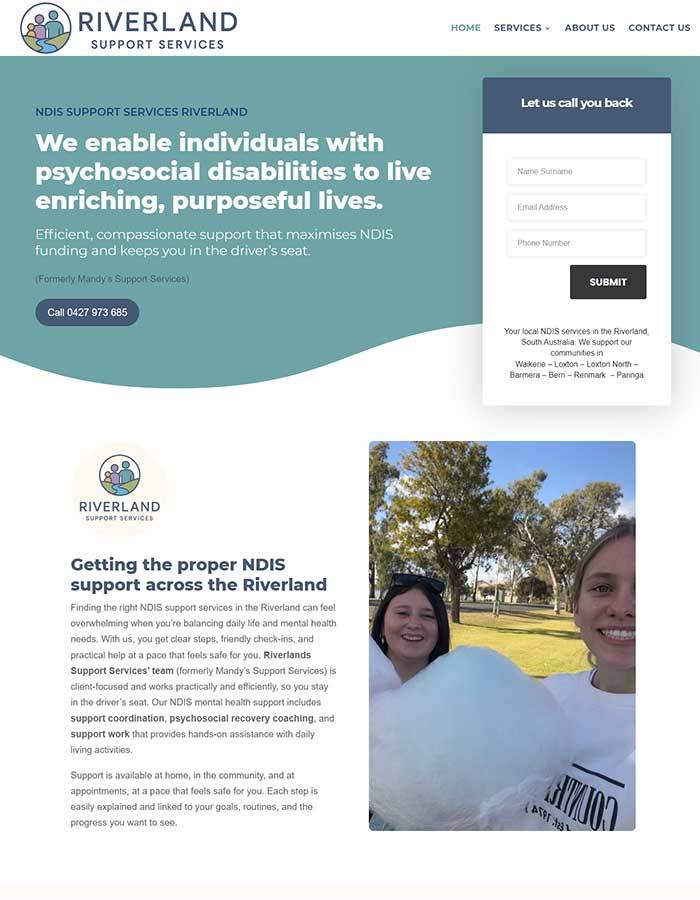
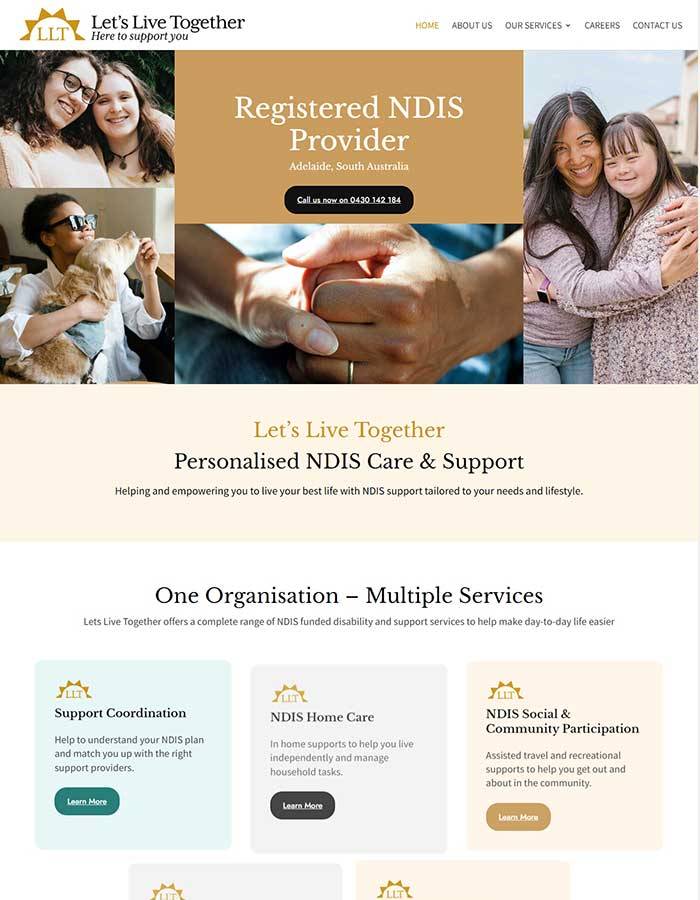
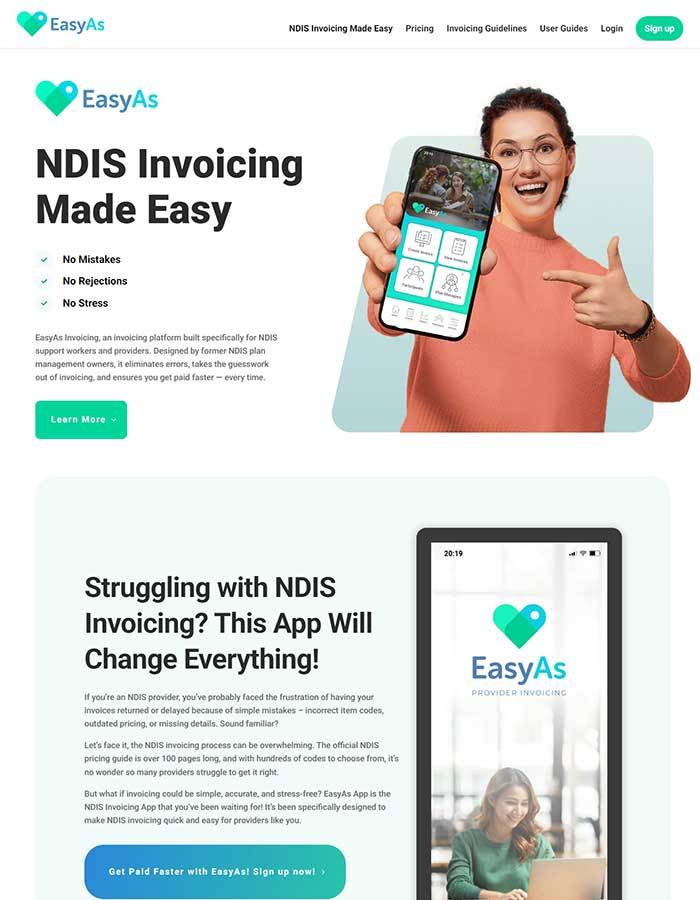
Who we help, what the website explains and where you operate
Who does Website Adelaide create NDIS websites for?
Website Adelaide creates websites for smaller NDIS and disability service providers across Adelaide and South Australia, from sole practitioners to multi-service organisations.
What should an NDIS provider website communicate?
It should make services, eligibility or funding information, service areas, delivery methods, referral steps and practical contact information easy to understand.
Where do NDIS providers we work with operate?
Our clients include Adelaide-based providers, organisations working across regional South Australia and mobile services supporting participants across broader service areas.
Participants are not the only audience
An NDIS website may be visited by the participant, but they are often not the only person involved in finding or arranging support.
A participant may be looking for a service that feels appropriate and respectful. A parent or carer may focus on reliability, staff experience and safety. A support coordinator may need specific information about services, capacity, funding arrangements and referral steps.
Other visitors can include plan managers, allied health professionals, guardians, community organisations and hospital or community-service teams.
Trying to address everyone with one broad paragraph usually creates vague content.
The website needs a clear participant pathway while still giving referrers and other decision-makers the practical information they need.
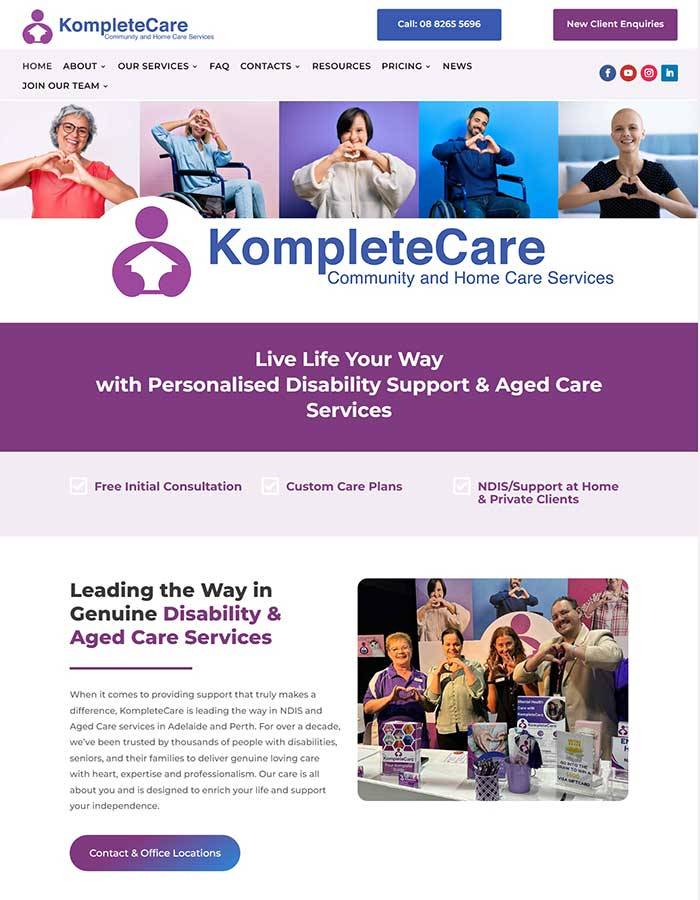
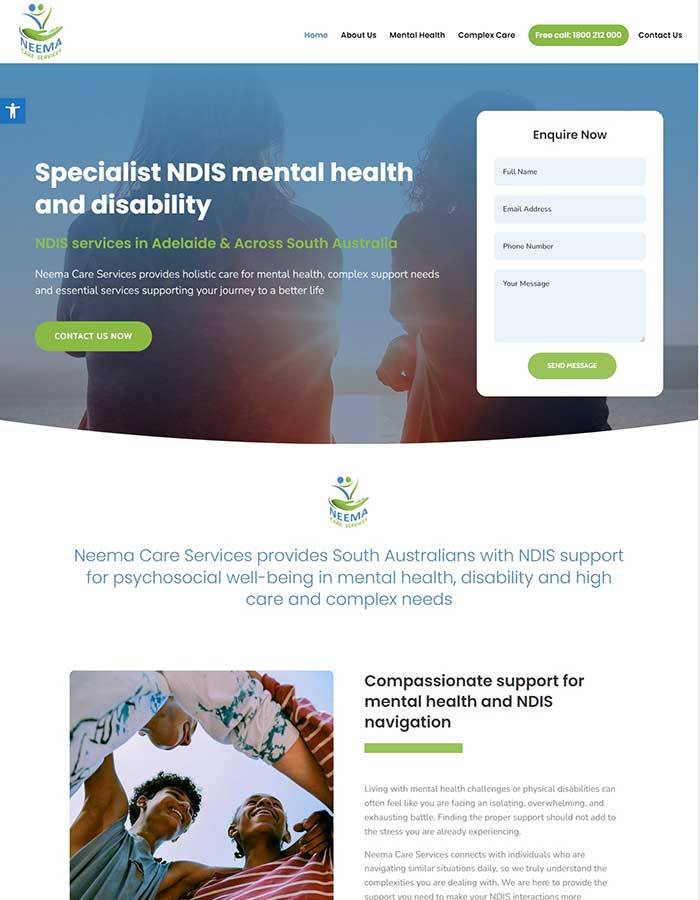
The NDIS website needs to help people decide if your service fits
Participants and referrers should not need to call simply to understand the fundamentals.
We usually find they need clear answers to questions such as:
What support do you provide?
Use recognisable service names rather than relying on broad statements about supporting people to achieve their goals.
Who do you support?
Explain relevant age groups, support needs or areas of experience where this genuinely reflects the organisation.
How is support delivered?
Make it clear if services are provided in the home, community, clinic, online or through a combination.
Where is support available?
State genuine service boundaries rather than implying wider coverage than the organisation can deliver.
How can the service be funded?
Explain relevant funding and plan-management arrangements where applicable.
What happens after contact?
Give people an idea of the enquiry, referral and availability process.
Specific information is usually more useful than broad phrases such as “comprehensive NDIS support”.
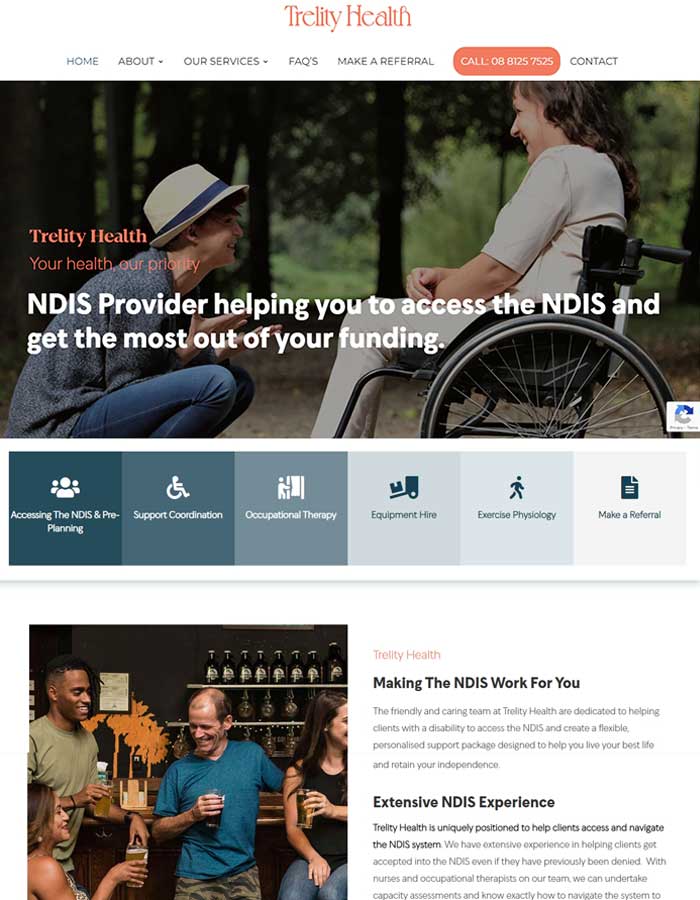
Give priority NDIS services their own space
Where a provider offers several important services, we would not usually recommend relying on one general NDIS Services page.
Participants and referrers often need enough detail to understand how one support differs from another.
For priority services, we would typically create dedicated pages that explain:
- what the service involves
- who it may be suitable for
- how and where support is delivered
- relevant staff experience or qualifications
- referral or funding arrangements
- availability and next steps
A smaller provider may only need several substantial service pages. A larger organisation may require separate pathways for allied health, psychosocial support, home and living services or community participation.
Our approach is to give the services that matter most enough room to be properly understood without creating repetitive pages simply to make the website appear larger.
Explain funding and registration information clearly
NDIS websites can involve practical information that does not appear on many other service-business websites.
Participants and referrers may need to understand registration groups, funding arrangements or whether the provider works with self-managed, plan-managed or NDIA-managed participants before making contact.
Where this information affects access to a service, it should not be buried in paperwork or left for someone to discover during a phone call.
Our experience has shown that clear service definitions and funding information can remove unnecessary friction for support coordinators and families who are trying to establish whether a provider is relevant.
Write about people and support with care
Some NDIS providers work broadly across disability services. Others have particular experience supporting people with psychosocial disability, autism, neurological disability, complex support needs or other circumstances.
That information can help participants and referrers recognise relevant capability, but it needs to be written carefully.
The purpose is not to define someone by a diagnosis or disability.
Person-centred language, respectful explanations and specific information about the support provided are more useful than broad claims about being caring, compassionate or specialised.
Specialist capability should also be supported by genuine experience, qualifications, systems or service delivery.
Our website copywriting process uses information from the provider to develop clear, respectful content without making every NDIS organisation sound the same.
Make referrals simple without collecting too much
A general contact form may not collect enough information for an NDIS referral. An excessively detailed form can create another barrier.
Depending on the provider, an initial referral may ask for the requested service, suburb or region, funding management type, preferred contact method and relevant referrer details.
Some providers benefit from separate participant and professional referral forms. Others need one straightforward enquiry pathway.
The website should also explain what happens after submission, including any initial conversation, availability check or next step.
Sensitive information should only be requested when it is genuinely needed and handled through an appropriate process.
Service areas and availability deserve attention
We have worked with NDIS and disability providers across Adelaide and regional South Australia, including organisations delivering services from fixed locations, in participants’ homes, in the community and across large regional service areas.
That experience has shown us how important geographic clarity is. Participants, families and referrers need to know not only what support you provide, but where it is actually available.
A regional or mobile provider may operate far beyond its office location. Another organisation may provide particular services only in selected Adelaide areas. Some may also offer telehealth or different service boundaries depending on the support.
The website should make those differences clear and keep availability information current rather than relying on broad statements such as “Adelaide-wide” or “South Australia-wide”.
New and established providers face different challenges
A newer provider may need a focused website design around its current supports, service areas, participant information and referral pathways without trying to present every possible NDIS service.
As the organisation develops, services, locations, staff and referral relationships can change quickly. An older website may no longer reflect what is currently available or make it easy for participants and referrers to understand the provider.
For providers starting from scratch, our website design service can establish the right structure from the beginning. For established organisations, our website redesign service can retain useful content and existing search value while reorganising the website around current services, capacity and referral needs.
Turn frontline knowledge into useful content
01
Some of the most valuable website information comes from the people answering participant enquiries and delivering the services.
They know which questions are asked repeatedly, where referrals become unclear and what information is needed before support can begin.
02
We use those conversations to develop content around actual participant and referrer needs rather than generic disability-sector wording.
That might mean clearer service pages, funding information, service-area guidance, referral pathways or practical participant information.
See our NDIS and disability experience
This page focuses on the practical decisions involved in planning an NDIS provider website.
For project examples and broader experience across support coordination, psychosocial support, allied health, complex care and community services, visit our NDIS and Disability Website Design industry page.


Common questions about NDIS website design
How much does an NDIS provider website cost?
Cost depends on the number of services, audiences, locations and pages required. Our website design pricing guide explains typical project ranges.
Does every NDIS service need a separate page?
No. Priority services usually benefit from individual pages when they require meaningful explanation. Closely related supports can be grouped where the difference remains clear.
Can you write our NDIS website content?
Yes. We develop the structure and wording from information supplied by the organisation. Your team reviews service accuracy, terminology and organisational information before publication.
Can the website include referral forms?
Yes. Forms can be created for participants, families or professional referrers, with the initial questions limited to information genuinely needed at that stage.
Can we update services and availability?
Yes. Our websites are built in WordPress, allowing authorised team members to update routine service, location and availability information.
Discuss your NDIS website design
Your website should make it easier for participants, families and referrers to understand what you provide and how to take the next step.
We can help work through your services, audiences, funding information, service areas and referral process, then turn that into a clear website structure, purpose-written content and design.
Explore how we work, review our website design pricing, or contact Website Adelaide to discuss a new NDIS website or improvements to your current one.