
People looking for accommodation don't all begin their search in the same way. Some know exactly where they want to stay, while others are exploring destinations, comparing accommodation types or looking for particular experiences.
Through our work designing accommodation websites in South Australia, we've found that understanding these different search journeys is an important part of website planning.
The challenge isn't simply to appear in more searches. It's to communicate what makes the accommodation relevant to different guests and provide the information they need to consider it.
Understanding who your accommodation is for
Before planning an accommodation website, one of the first considerations is understanding which guests the property is most suited to and what matters to them.
A luxury retreat for couples offers a different experience from a large family holiday home, group accommodation or somewhere suited to an extended stay.
These differences influence how people search and what they expect to find.
For example, a family researching accommodation around Port Elliot may prioritise space, separate bedrooms, outdoor areas and proximity to the beach. A couple looking for a weekend retreat in McLaren Vale may be more interested in privacy, surroundings and nearby wineries.
Both may be searching in the same general region, but their needs and expectations are quite different.
In our experience, effective website strategy starts with understanding the accommodation, its most relevant guests and the reasons they might choose it over other options.
This influences how the property is presented, which information receives prominence and how the website communicates its particular appeal.
How Google and AI search are changing accommodation discovery
Search behaviour is evolving as people use different platforms to research destinations and accommodation.
Traditional Google searches remain important, but AI tools are introducing another way for travellers to explore options through conversational questions.
Someone considering a holiday on the Fleurieu Peninsula might begin by asking an AI tool to recommend places to stay. They may then narrow their requirements to accommodation suitable for families, somewhere close to beaches or a private retreat within reach of McLaren Vale.
Why detailed accommodation information matters
As the questions become more specific, the information available about each property becomes increasingly relevant.
This is where accommodation positioning and detailed website content come together.
A website that explains its accommodation type, facilities, suitability, location and surrounding experiences provides useful information for guests and for search systems interpreting those details.
AI search doesn't guarantee that a property will be recommended, and different platforms discover and present information in different ways. However, informative and well-structured content helps cover more of the ways people may research accommodation.
From our perspective, this strengthens the importance of planning website content around genuine customer questions rather than focusing only on a narrow set of keywords.
Location, attractions and experiences create different search entry points
One aspect we consider when planning accommodation websites is that guests don't necessarily begin by searching for accommodation in the town where a property is located.
They may be researching a destination, an attraction or an experience first.
For example, someone planning to explore McLaren Vale wineries might be happy staying in nearby Willunga or another part of the Fleurieu Peninsula.
Similarly, visitors interested in Victor Harbor, Port Elliot or Goolwa may consider accommodation across several nearby locations rather than restricting themselves to one town.
For other travellers, the starting point isn't accommodation at all. It might be walking trails, beaches, wineries, family attractions or things to do during a weekend away.
Helping guests understand your location
These different entry points create opportunities for accommodation businesses to explain their location in a broader context.
Useful information may include nearby destinations, driving distances, local attractions and activities that appeal to the property's intended guests.
For example, explaining that accommodation is conveniently located for exploring several Fleurieu Peninsula towns can be more informative than simply stating its street address.
This also has implications for on-page SEO. Relevant location and destination information can help search engines understand the geographical context of the property and provide additional opportunities for visibility in related searches.
The objective isn't to mention as many locations as possible. It's to provide genuinely useful information that reflects why guests might choose to stay there.
Helping guests compare and confidently choose accommodation
When we think about how we personally research holiday accommodation, we rarely consider just one property. We usually narrow the options to a few places and compare their locations, facilities and suitability before deciding where to stay.
This is something we also consider when planning accommodation websites.
Once someone has discovered a suitable property, the information on its website needs to help them evaluate it against other options.
Attractive photography creates an impression, but practical details are equally important.
The practical details guests compare
Guests may want to understand the bedroom configuration, bed sizes, kitchen facilities, outdoor spaces, accessibility, parking, inclusions and proximity to places they intend to visit.
The information should be detailed enough to answer their questions, but organised so it remains easy to navigate, read and compare.
This doesn't mean filling every page with lengthy descriptions. It means making important information accessible, using relevant headings, informative content, useful images and a logical page structure.
When guests can understand what a property offers and how well it meets their needs, they are better placed to make a confident decision.
What this means for accommodation websites
Our experience designing websites for accommodation and tourism businesses in South Australia has reinforced the importance of understanding the guest's journey before deciding how a website should be structured.
Different guests search in different ways, enter through different topics and compare different aspects of accommodation.
Bringing together positioning, useful content, website structure and SEO helps businesses communicate their offering across these different stages.
It's an approach we apply to our accommodation and tourism website projects, combining our understanding of customers with website design and search considerations.
The aim is to make it easier for relevant guests to discover the accommodation, understand what makes it suitable and feel confident about their choice.
Accommodation websites we’ve designed
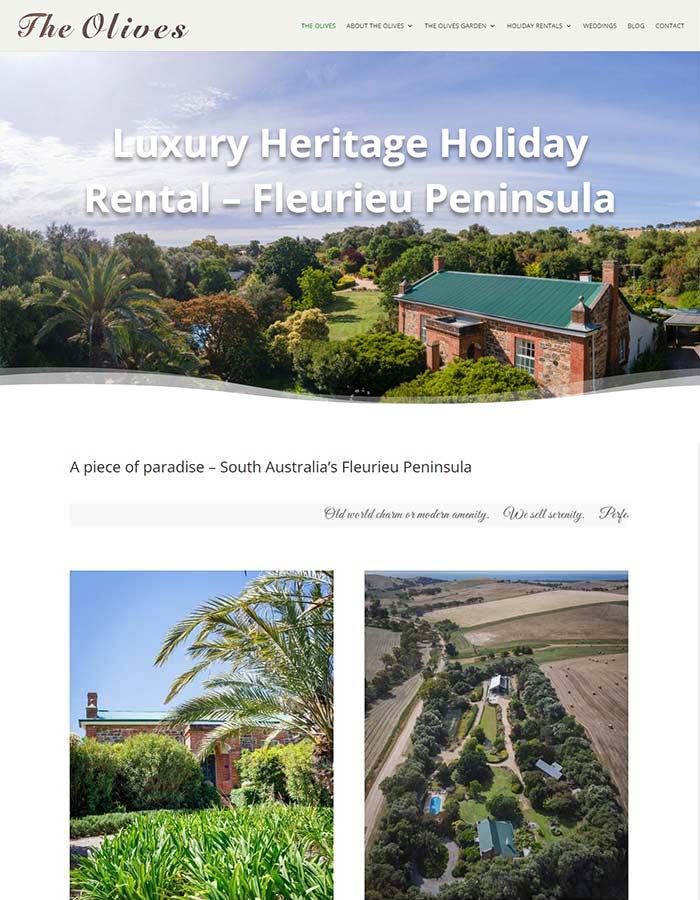
Explore a selection of our accommodation website projects.
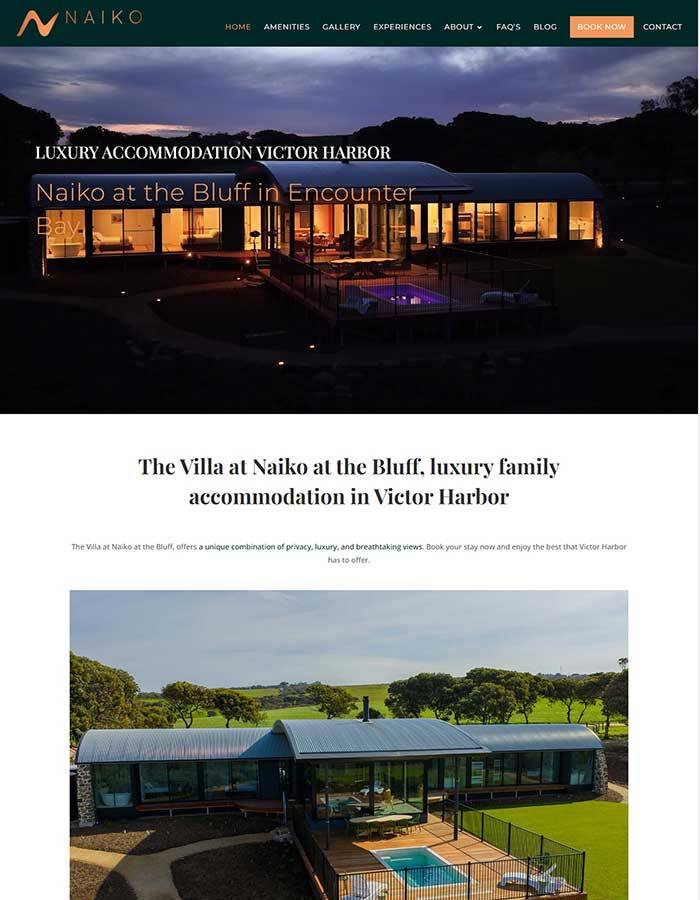
Naiko at the Bluff
Visit website (opens in a new tab)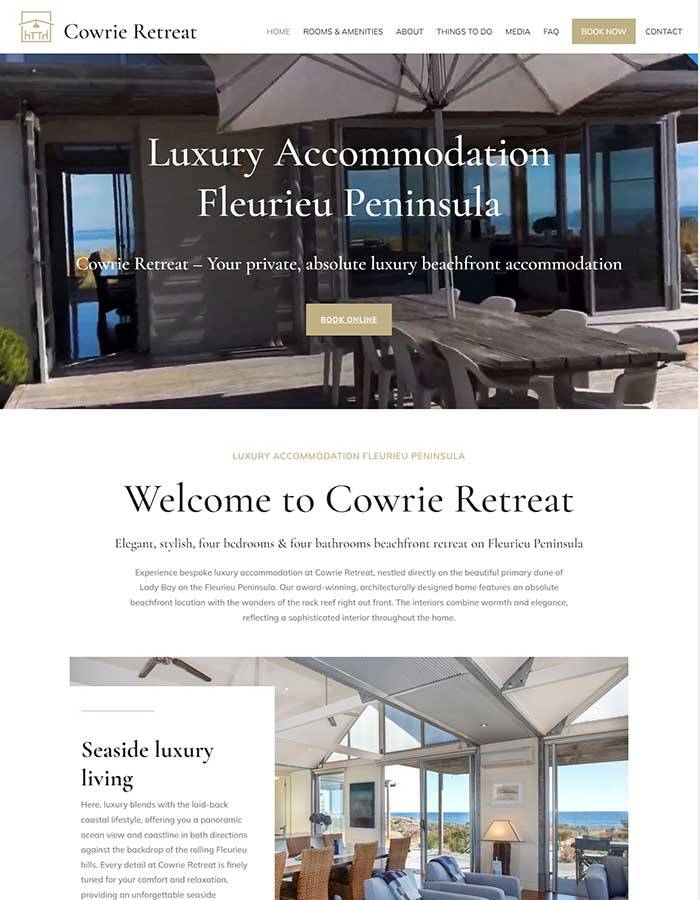
Cowrie Retreat
Visit website (opens in a new tab)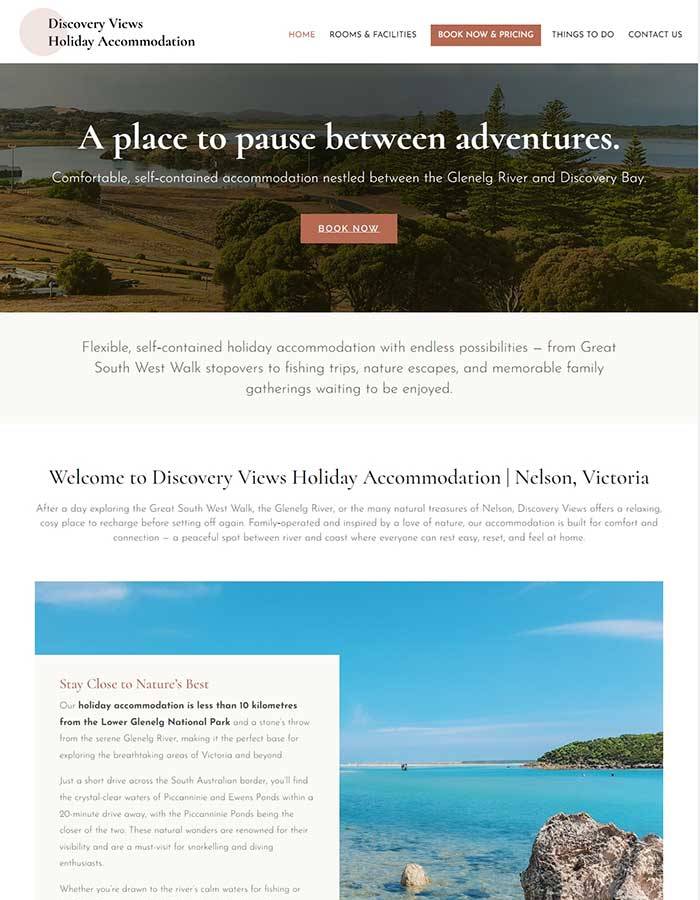
Discovery Views Nelson
Visit website (opens in a new tab)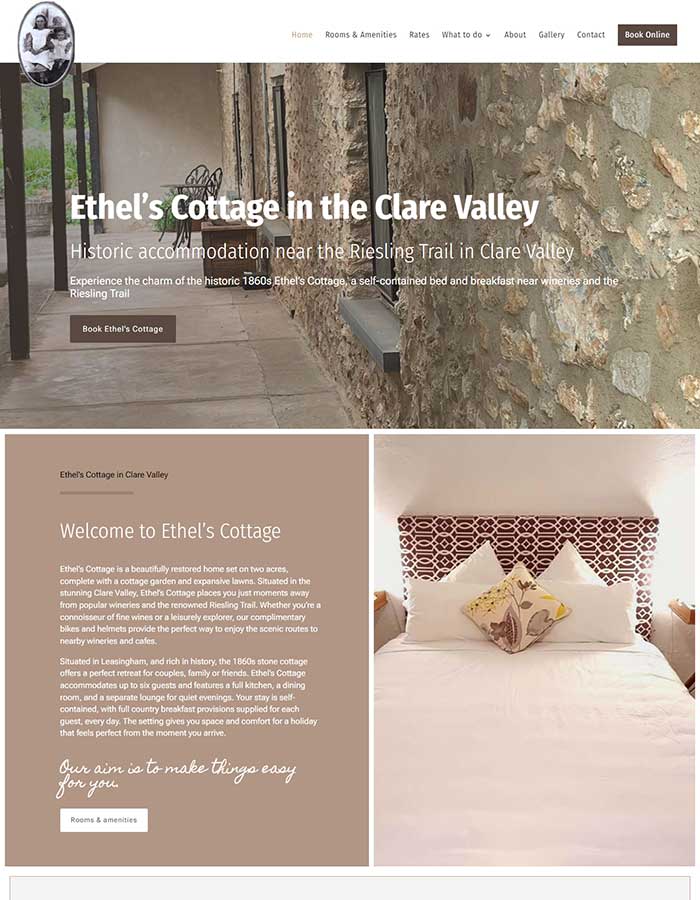
Ethel’s Cottage
Visit website (opens in a new tab)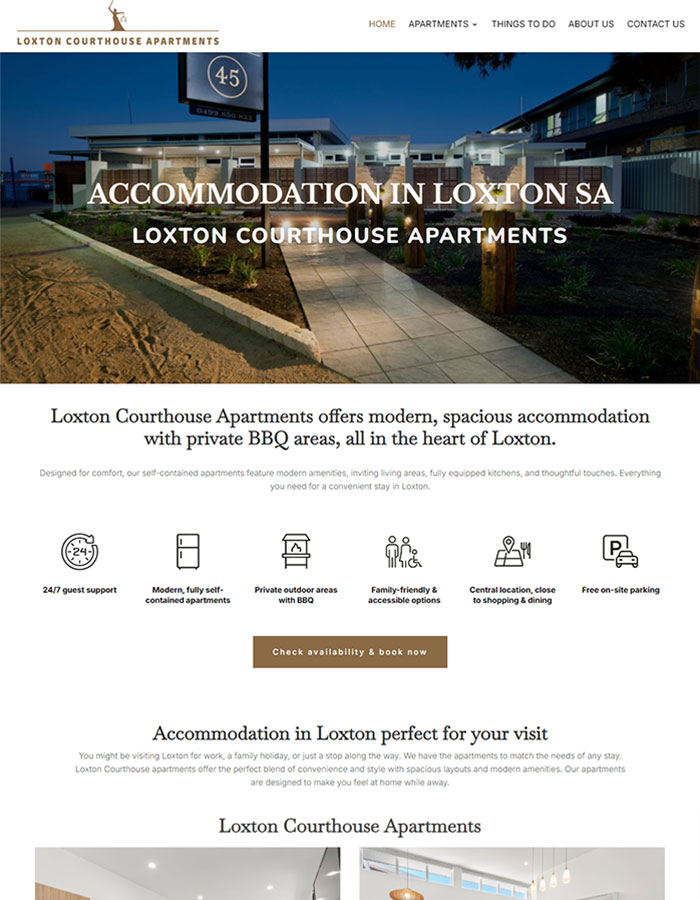
Loxton Courthouse Apartments
Visit website (opens in a new tab)