The amount and type of information customers need also changes considerably.
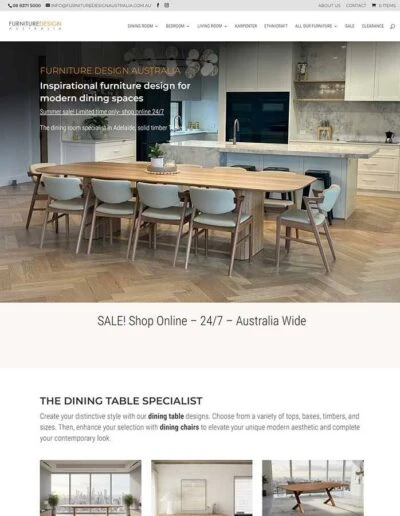
A designer furniture customer may look closely at dimensions, timber, construction, finishes and delivery before committing to a higher-value purchase.
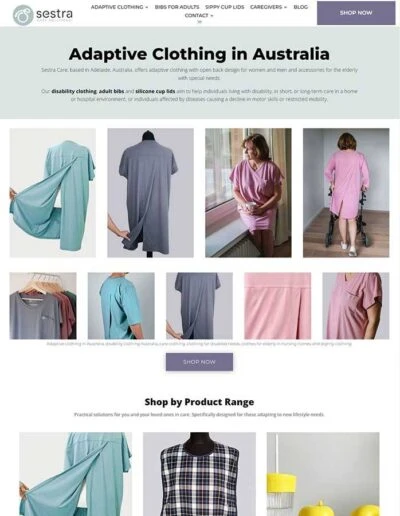
A Sestra Care customer may need detailed sizing and practical information about how adaptive clothing works.
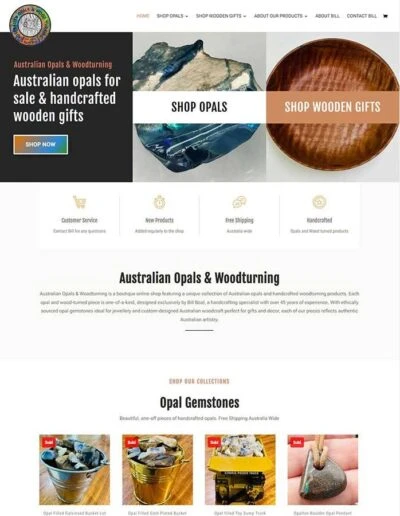
For an artisan product, craftsmanship, provenance and confidence that the photograph represents the exact item can carry more weight.
The strongest product information has therefore been specific to the buying decision rather than based on one standard product-page formula.
Physical retail and online sales can support each other
Not every retail website we work on exists solely to complete transactions online.
Some businesses combines eCommerce with a physical showroom where customers can inspect products and receive advice before purchasing.
Other businesses may use the website to support click and collect, local delivery, trade enquiries or product research before someone visits in person.
That experience has shown us that the physical business and website do not need to operate as separate channels.
For some retailers, helping someone arrive at the showroom better informed can be just as valuable as completing the sale online.
Wider retail and eCommerce website design experience
Our experience extends beyond the featured projects and includes furniture, specialist online retail, trade supply, artisan products and other product-led businesses.
Across those projects, the balance between product information, online checkout, enquiry and physical retail has varied significantly.
Some businesses rely heavily on WooCommerce and national shipping. Others use the website to support a showroom, warehouse, trade counter or local customer base.
That broader experience helps us understand the difference between a website built primarily to process transactions and one that needs to support a more considered buying journey.